

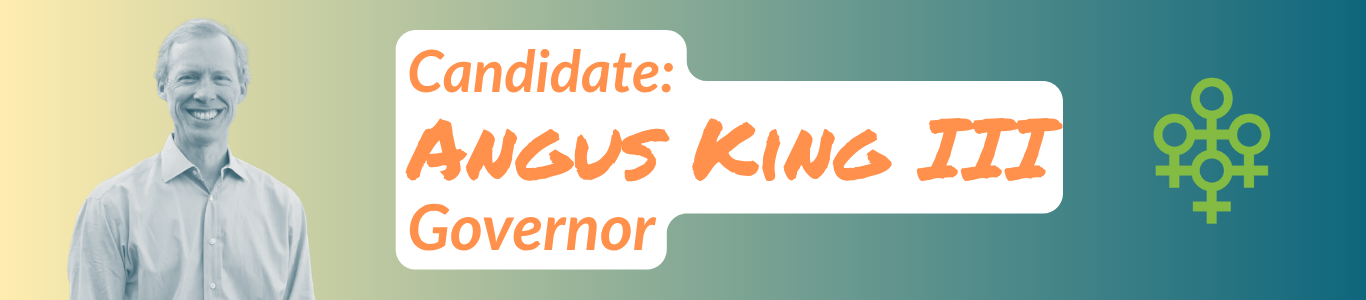
Building care infrastructure and economic equity
What are your top policy priorities to address the barriers and challenges facing the care work industry (child care, elder care and health care) and systemically undervalued and underpaid care workers, 80% of whom are women?
“I outlined an education plan that was focused both on early-stage education and kids. It was focused on how do we support teachers, but it was also about how do we support more and better training, so that there are better partnerships between schools, higher education, employers, but also high schools and middle schools to create pipelines of kids into high-need fields like childcare and healthcare. I think the punchline is, we're going to have to be very nimble. The federal government is going to continue to throw challenges and cuts at us on a regular basis.”
What types of new or ongoing interventions do you support to address disparities in unpaid and informal care work which often forces women out of the workforce, limiting health insurance, social security benefits, and retirement savings?
“I think it's really important, and this is what my campaign is really about, is how do we lower costs for Maine families so that people who don't have the resources… can still afford heat, housing, healthcare, taxes, and how do they have some hope that they can get through there every day? And that starts a lot with, how do we have better economic development, but how do we focus on lowering costs so that people can get through these moments… I'm wide open to good ideas.”
Highlights from our conversation on April 6, 2026
"The federal government is going to continue to throw challenges and cuts at us on a regular basis.”
“How do we have better economic development, but how do we focus on lowering costs so that people can get through these moments.”
Ensuring reproductive and gender-specific healthcare
What are your top policy priorities to address the barriers to accessing consistent, high-quality perinatal care given the rapid closure of birthing units, especially in rural areas?
“On workforce, you know, you can't keep a unit open without people to staff it. And I think there are, again, lots of examples where you can have loan repayment solutions, scholarship programs, so we have more OBGYNs, more certified nurse midwives. And labor and delivery nurses who would commit to practicing in rural Maine… I think we've made some progress on telehealth… It can increase access to specialists, it can increase monitoring, it can reduce the sort of this fragmented care. It can give people an opportunity to have a lot more care without having to drive two hours back and forth to a hospital every time.”
“[Telehealth] can give people an opportunity to have a lot more care without having to drive two hours back and forth to a hospital every time.”
Ending gender-based and carceral violence
What do you see as the key policy interventions to support sexual assault and domestic violence survivors and protect access to services given recent federal VOCA funding cuts?
“This is about public safety to me. Domestic violence is a leading cause of homicide in Maine. It drives foster care placements, substance abuse, homelessness, mental health issues, trips to the ER. We may never end domestic abuse, but we should make sure that we really do support survivors as much as we can. The VOCA and VAWA cuts are certainly concerning.”
“We may never end domestic abuse, but we should make sure that we really do support survivors as much as we can.”
Developing equitable & accessible government systems
How do you think the tax structure and government budget can be used to create more gender equity and reduce disparities?
“I don't feel confident or comfortable making tax or budget commitments, but I think there are some low-cost and leadership opportunities that will help make a difference, regardless of the financial situation we're in. And I think it's around how do we make sure that working families aren't feeling so squeezed? How do we help on childcare, housing, healthcare, everyday expenses? Especially because most of those pressures fall disproportionately on women, especially caregivers.”
If elected, how would you stay connected and accessible to the people you represent?
“I'm not a big sit-behind-the-desk guy. Candidly, I don't ever sit, I stand, but I think it's really important that we get out into visiting nonprofits, visiting public schools, visiting businesses to see how we're making progress…it's important to remember that we're all just people, and it starts really with listening and being with people, and Maine is a big state with a lot of different communities, but I think you've got to start by listening to those communities, and that's been one of the joys of this campaign, is getting to do exactly that.”
“How do we make sure that working families aren't feeling so squeezed? How do we help on childcare, housing, healthcare, everyday expenses?”
“I think you've got to start by listening to those communities, and that's been one of the joys of this campaign, is getting to do exactly that.”
Other notable quotes
“A lot of this is fundamentally primary healthcare that people need. We do not invest enough in primary healthcare just at the outset, and so these clinics, this work is just critical. It is the way that you actually lower costs and improve outcomes for our healthcare system here in Maine. So, it's really important, beyond birth control and abortion….I will always protect a woman's right to make their own healthcare decisions. The government does not have a role, and I think we're pretty lucky to live in a place like Maine, where these rights are generally pretty well protected. So I think that's sort of an essential starting point.”
Each profile features direct quotes pulled from candidate’s answers to our questions. Full transcripts of each conversation can be found by clicking here.