

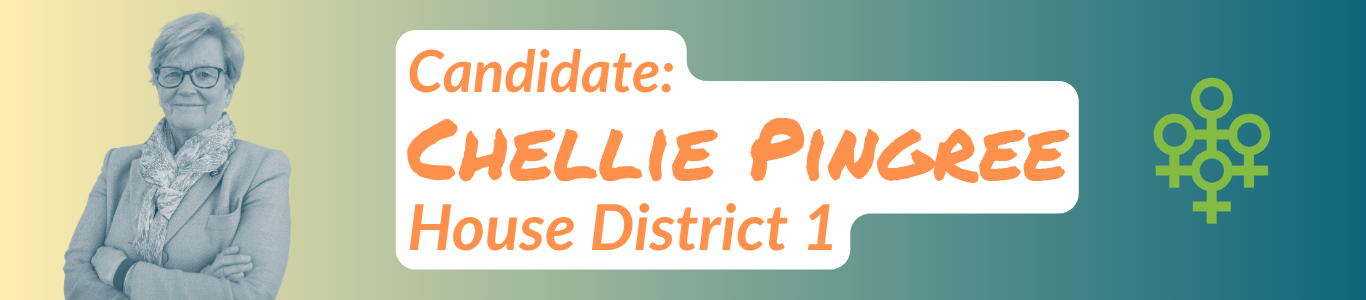
Highlights from our conversation on April 7, 2026
Building care infrastructure and economic equity
What types of new or ongoing interventions do you support to address disparities in unpaid and informal care work which often forces women out of the workforce, limiting health insurance, social security benefits, and retirement savings?
“Number one would be just having universal access to health care. So if healthcare weren't such a big challenge sometimes people go to work for the healthcare or they stay in a job they don't even like because they need the health care benefits. And health care benefits should not be tied to work. We should have a singlepayer system that everyone can access. It's embarrassing we're the wealthiest nation in the world and really the only western country that doesn't have some sensible system of affordable healthcare.”
“Health care benefits should not be tied to work. We should have a single payer system that everyone can access.”
Ensuring reproductive and gender-specific healthcare
What do you see as the biggest barriers and challenges facing access to consistent, high-quality perinatal care given the rapid closure of birthing units, especially in rural areas?
“It's a really fundamental economic issue, and I think people don't recognize that enough, particularly in a rural state. So I would say those underpinnings are huge. Also provider shortages. You often hear about people who can't get into a primary care physician or can't get maternal care or we don't have enough midwives or other care people in that area, and we're messing with that system too.
One of the things this [Trump] administration has done is made it much more difficult to get access to student loans, and they're now taking people out of some of the categories like nurse practitioners and others who have really taken over care and are so essential and excellent at being part of our care system.”
What do you see as the key policy interventions to protect access to family planning and reproductive health care given recent federal Title X funding cuts?
“The misguided, ideologically driven cuts that have happened at the federal level and have just been eating away over time have done an enormous amount of damage to all of the institutions that help do that level of care—Planned Parenthood, [Maine] Family Planning… [I] spend a lot of time making the case to people and helping them understand that those are essential facilities in our state, that they're a good use of federal dollars, that they deserve to have Medicaid, that these are the places that people go for essential cancer screenings and other primary health care and often have nowhere else to go or nowhere else that they feel safe.
I spend a fair amount of time visiting them, talking to them, and just trying to fight back at a federal level both at the appropriations level on the funding and then on every misguided piece of legislation.”
“It's a really fundamental economic issue, and I think people don't recognize that enough, particularly in a rural state.”
“These are the places that people go for essential cancer screenings and other primary health care and often have nowhere else to go or nowhere else that they feel safe.”
Ending gender-based and carceral violence
What policy solutions do you support to address gun violence in our and country, and the disproportionate impact on women and gender-minorities?
“The truth is Republicans and Democrats alike as citizens, polling data shows that they support much more gun regulation than we have in this country… organizations like the NRA and others that push for no gun laws are supported by gun manufacturers, not really by public opinion…. I think this is one of those issues that just stands out as you know a misguided piece of legislation that happens because…of the amount of money that's spent, not because of doing what's right for people or children or families.”
“The truth is Republicans and Democrats alike as citizens, polling data shows that they support much more gun regulation than we have in this country.”
Developing equitable & accessible government systems
How do you think the tax structure and government budget can be used to create more gender equity and reduce disparities?
“I am just deeply deeply worried about our tax structure when you look at the “Big Ugly Bill” which codified many of the the tax cuts that President Trump had made during his first administration, the overall imbalance in our tax system and the gap between the rich and the poor- which has grown so much more in the last two decades— is just getting dramatically worse all the time. That means that there's far less money to fund those programs in government that would help us to support women and families and and children, all the things we're talking about today, really get funded.”
If elected, how would you stay connected and accessible to the people you represent?
“When we're in recess, we try to meet with people. Sometimes it's on Zoom, often it's in our office or make site visits. We've done town meetings over the past year. And then these days, social media is sort of the bread and butter for all of us. And we have learned to just, you know, pick up the phone and the camera and start talking into it so that people can know at any moment in time what I'm voting on that day, what we're working on that day, you know, to stay as connected as possible and then to hear what people say back to us. I work for you guys so it's my job to be accessible and available and talk to people wherever they are.”
“The overall imbalance in our tax system…is just getting dramatically worse all the time. That means that there's far less money to fund those programs in government that would help us to support women and families…”
“I work for you guys so it's my job to be accessible and available and talk to people wherever they are.”
Other notable quotes
“I've supported a whole variety of bills that have supported the child care industry whether it's the providers themselves, helping people to start and create these businesses [and] keep them sustainable to help parents pay the cost of child care because it's gotten in some cases as expensive as college tuition or it's made it so difficult to pay that many parents find they can't even afford to go back to work. And frankly we need parents in the workforce if they choose to go there."
“When you think about it in a political context, I often, you know, think about like when when I'm in a party that's in the majority, we have to be big and bold and go for all those things we possibly can because you just rarely get where you want to go by, you know, ekking out a little change here and there… And when you've got it, you just got to go for it all. And you can't say like, oh, we shouldn't bite off too much. And I think we've really learned that lesson over time and hopefully we'll get back to that place where we can make some bold moves for our country.”
“We've got the… abuser chief as our president, and all too often this administration, both he has gotten away with an enormous amount of things that people you know, just sort of slough off as like his locker room talk or bad behavior, and we've also seen a real philosophical shift to sort of more male dominance in the system. And I I think you can't, you know, you can't just close your eyes when that's happening and you have to speak up and and talk back.”
“I think we should just think about these as essential civil rights protections. I'm just horrified at how this has been used as a tool mostly by the right to try to you know stir up public sentiment to turn things into a political issue that should just should be basic human protections. People should have the right to be who they are and we should support them in every possible way. So every chance we get when a you know proposal comes before me … in the house I vote against things that would do harm to people and try to support in any possible way things that just allow for gender expression and gender identity.”
Each profile features direct quotes pulled from candidate’s answers to our questions. Full transcripts of each conversation can be found by clicking here.